A Designer’s Review of 3D Snowman Christmas Ornament Back 53 Graphics
First Impressions: A Festive Blend of Charm & Versatility
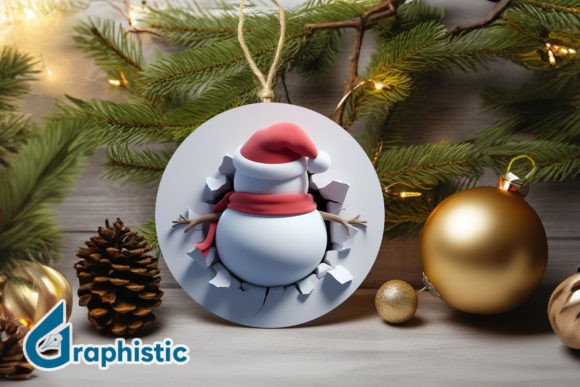
Opening the file for the 3D Snowman Christmas Ornament Back 53 illustration, my immediate thought was: “This has a distinct, playful charm that feels both nostalgic and modern.” The graphic presents a classic snowman viewed from the back, a clever perspective that adds a touch of storytelling to a seasonal design. It doesn’t scream “cartoon”; instead, it carries a gentle, almost handcrafted 3D aesthetic that suggests warmth and personalization. For a designer evaluating assets for client work, this first impression is crucial. It tells me this element isn’t just clipart; it’s a design asset with a specific mood—cozy, inviting, and slightly whimsical—perfect for projects aiming to connect on an emotional level rather than just announce a sale.
The Ideal Project Fit: Boutiques, Crafters, and Seasonal Campaigns
This graphic naturally aligns with clients who value a handmade or boutique feel. Imagine a small business owner running a seasonal Etsy shop for holiday decor, a local bakery launching a Christmas cookie box line, or a community center designing event posters for a winter festival. For these projects, 3D Snowman Christmas Ornament Back 53 isn’t merely decoration; it becomes a central visual motif that sets the entire creative tone. It would feel out of place in a stark, minimalist corporate holiday report, but for a brand identity leaning into tradition, craft, or family-friendly celebration, it’s a strong starting point.
Performance in Real Design Scenarios
As a practical designer, I always visualize how an asset behaves across different applications. Here’s how this illustration holds up.
Where It Shines: Hero Graphics and Decorative Details
Its detailed 3D style makes it excellent for larger layout areas where its texture and form can be appreciated. Use it as a hero graphic on a holiday website banner, a focal point on a printable wall art poster, or a beautifully detailed element on product mockups like a mug or tote bag design. For packaging design, it could serve as a wonderful accent on a gift tag or label, adding a premium, artful touch. In social media graphics, especially for platforms like Instagram or Pinterest that favor rich visuals, it can anchor a post about a holiday product launch or a DIY craft tutorial, instantly communicating the theme.
- Large-scale applications: Posters, flyers, website headers, large format printable art.
- Themed collections: Building a cohesive set of holiday marketing visuals or a series of Canva templates.
- Product application: Sublimation designs, t-shirt graphics, sticker sheets, custom apparel where the detail is preserved.
- Supporting brand elements: For a handmade business, it could integrate into a seasonal logo variation or become part of a recurring pattern in editorial design for a holiday blog.
Where to Exercise Caution: Scale and Context
The intricacy of this asset means it requires careful consideration in certain layouts. In very small sizes—think a tiny icon on a web button or a minor detail on a busy product label—the fine details may become muddy or lost, compromising visual hierarchy. Placing it on a complex, patterned background could also reduce its impact and make the overall design feel crowded. While it boosts emotional appeal and audience engagement for the right audience, it would detract from the clean, professional impression needed for, say, a financial services company’s holiday email. Always preview it at actual use size on your mockups.
- Small-scale use: Avoid using it as a small secondary graphic in dense informational layouts.
- Crowded compositions: Pair it with ample negative space and simple complementary elements.
- Minimalist branding: It’s inherently decorative, so it clashes with ultra-sleek, modern design systems.
The Designer’s Practical Checklist Before Client Use
Before committing this graphic to a real client project, I run through a set of professional checks. This ensures the final deliverable is polished and the asset supports, rather than hinders, the project goals.
Testing for Technical Integrity and Visual Balance
First, verify the commercial licensing. As a digital product intended for various projects, confirm the license covers your client’s intended commercial use, whether for print-on-demand merchandise or marketing visuals. Then, test the file formats. If an SVG is included, check its vector editability—can you easily recolor the snowman to match a client’s brand palette? A PNG with clean transparency is vital for overlaying on photos or mockups.
Next, conduct visual tests. Convert the graphic to black and white to see if its form remains clear without color dependency. Check its contrast on both light and dark backgrounds to ensure readability. Crucially, test a print sample if the final project is physical; the 3D shading and details must render cleanly on paper or fabric.
Pairing with Typography and Establishing Hierarchy
How does this illustration work with text? For a cohesive design, try pairing it with different font styles. A friendly script font might enhance its handmade mood for an invitation, while a clean sans-serif could ground it for a more structured poster. The graphic is inherently a strong visual element, so ensure any accompanying headlines or body text don’t compete. Use it to draw attention, then let clear typography deliver the message. This maintains a professional visual trust and brand consistency, even in a seasonal campaign.
Final Judgment: A Polished Asset for Targeted Projects
In conclusion, 3D Snowman Christmas Ornament Back 53 is a specific but highly useful graphic design asset. It won’t be a universal tool, but for the right project—where the goal is to evoke a sense of personalized holiday warmth—it performs excellently. It elevates a design from generic to bespoke, offering a frame-worthy art quality that clients in the handmade, boutique, and craft spaces appreciate. By following the practical checks—testing scale, context, and technical specs—a designer can confidently integrate it into commercial design work, ensuring it improves the final result’s polish and emotional resonance. It’s a digital product that, when applied thoughtfully, becomes more than just an illustration; it becomes a key part of a successful seasonal brand story.